
British vs IB: the International School Curriculum Options in Bali
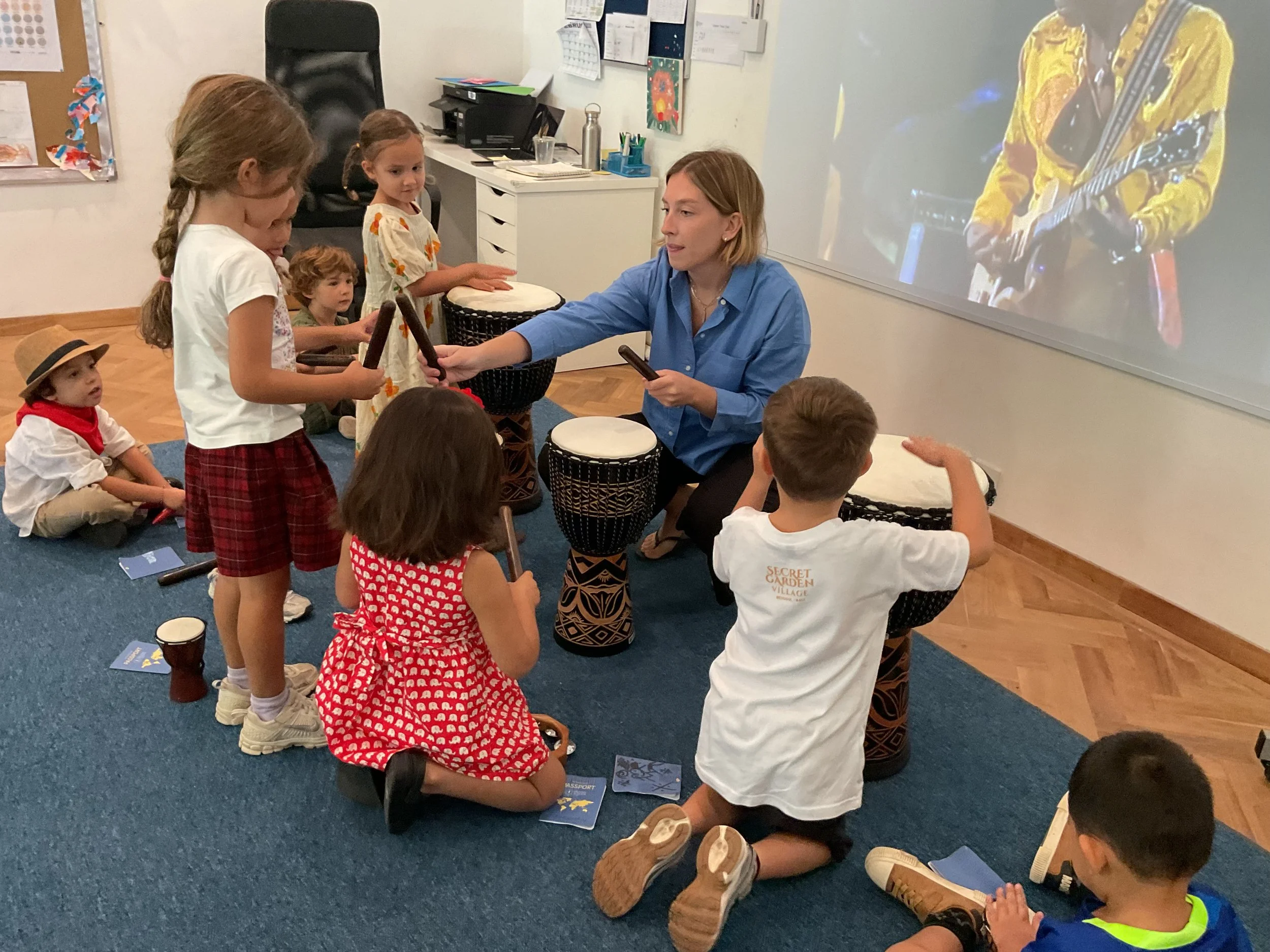
The British School of Bali offers the English National Curriculum, in Ubud, Bali
By Tanya Pikhtovnikova, 19 August 2026
In addition to fees and location, the other big criterion is usually the curriculum, with the English National Curriculum and the International Baccalaureate dominating the landscape.
While the two main options are less different than many would think, there are important differences, especially at the pointy end — A Levels or the IB Diploma. Below we've set out the landscape for Bali.
We cover the ENC and the IB, and given Bali's Australian population and proximity, the "Australian" curriculum. For each we set out the better-regarded school options and the age ranges covered, along with the trade-offs between the ENC and the IB, and university recognition and pathways.
The British curriculum
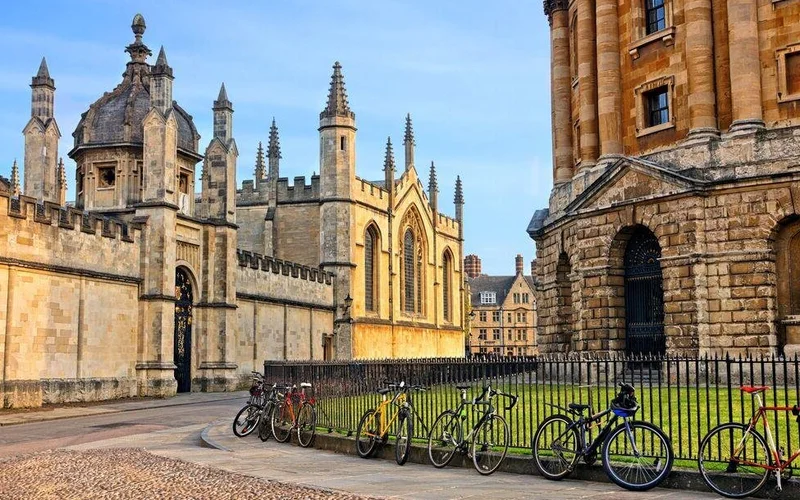
Oxford University - a prized destination for many in British international schools whether in Bali or around the world
The English National Curriculum runs in stages:
- EYFS — ages 3–5, Nursery and Reception
- Key Stage 1 — ages 5–7, Years 1–2
- Key Stage 2 — ages 7–11, Years 3–6
- Key Stage 3 — ages 11–14, Years 7–9
- Key Stage 4 — ages 14–16, Years 10–11, ending in IGCSEs
- Sixth Form — ages 16–18, Years 12–13, ending in A Levels
Two exam boards dominate internationally, Cambridge and Pearson Edexcel. Schools sometimes describe themselves as teaching "the Cambridge curriculum", which is simply a route through the English National Curriculum rather than a separate system.
At 16 students typically take eight to ten I/GCSEs, then narrow sharply to three or four A Levels. That narrowing is the defining feature. A sixteen-year-old who wants to study engineering would typically take maths and science subjects, and may decide to stop studying history and languages entirely.
The IB
The IB runs three programmes:
- Primary Years Programme (PYP) — ages 3–12
- Middle Years Programme (MYP) — ages 11–16
- Diploma Programme (DP) — ages 16–19
At the IB Diploma students take six subjects, three at higher level and three at standard, and must include a language, a science, a mathematics and a humanity. Alongside that sit three core requirements: Theory of Knowledge, a 4,000-word Extended Essay, and CAS, a creativity, activity and service commitment.
It is scored out of 45. The global average sits around 30. Canggu Community School's 2024 cohort averaged 32.23.
The breadth across maths, science, languages and the arts is forced rather than chosen. That makes the Diploma more intensive, and it suits all-rounders who are strong across the board.
The IB Headquarters in Geneva
The Australian curriculum
The Australian curriculum is, like the USA, state based. Australian-curriculum schools choose the Victorian, Western Australian, NSW or another state curriculum and exam board, or finish with the IB.
Regardless of whether an "Australian" school finishes with a state curriculum, the ENC or the IB, applications to Australian universities convert all of them into an ATAR score. Studying an "Australian" curriculum gives no advantage when applying to Australian universities.
Breadth or specialisation
Probably not surprising, but for most of a pupil's school life the quality of the school and the teachers matters more than the curriculum.
A seven-year-old in the PYP and a seven-year-old in Key Stage 2 are both learning to read, write, calculate and ask questions.
At 16 the choice between the ENC and the IB becomes more real.
A Levels suit a student who knows their strengths and weaknesses, or roughly where they are going. Three subjects means more depth and no requirement to keep going in a subject they find painful. Universities across the world make offers on three A Levels, so students get a clean run at the areas that interest them most.
The IB Diploma suits a student who is broadly capable and not yet committed. It keeps a language and a science alive to eighteen. It also means a student who is genuinely poor at mathematics cannot escape it, and the workload of TOK, the Extended Essay and CAS lands on top of six subjects rather than three.
Neither is harder in the abstract. They are hard in different places.
University recognition
Both are accepted by universities in the UK, the United States, Australia, Singapore, Hong Kong and across Europe. This is not a real point of difference.
What universities notice is the strength of the grades and the fit of the subjects to the course.
What about Bali?
The choice on paper is wider than the choice in practice, because it is constrained by how far up each school goes and by where you can realistically live.
English National Curriculum. The most common label on the island, taught at The British School of Bali, ProEd Global, Sanur Independent, Regents School Bali, Santosa Intercultural and around a dozen smaller schools.
Full IB continuum. Bali Island School in Sanur is the only school on the island running PYP, MYP and the Diploma, and is authorised to deliver the IB from age three.
IB Diploma in the senior years. Canggu Community School and AIS Indonesia.
Australian. AIS Indonesia, Denpasar.
Related: The British School of Bali · The best international schools in Bali · Living in Ubud with school-age children
